Attention
Placemaking environments slow people down and give the eye a reason to stay.
Experiential placemaking for commercial environments in Perth and Western Australia
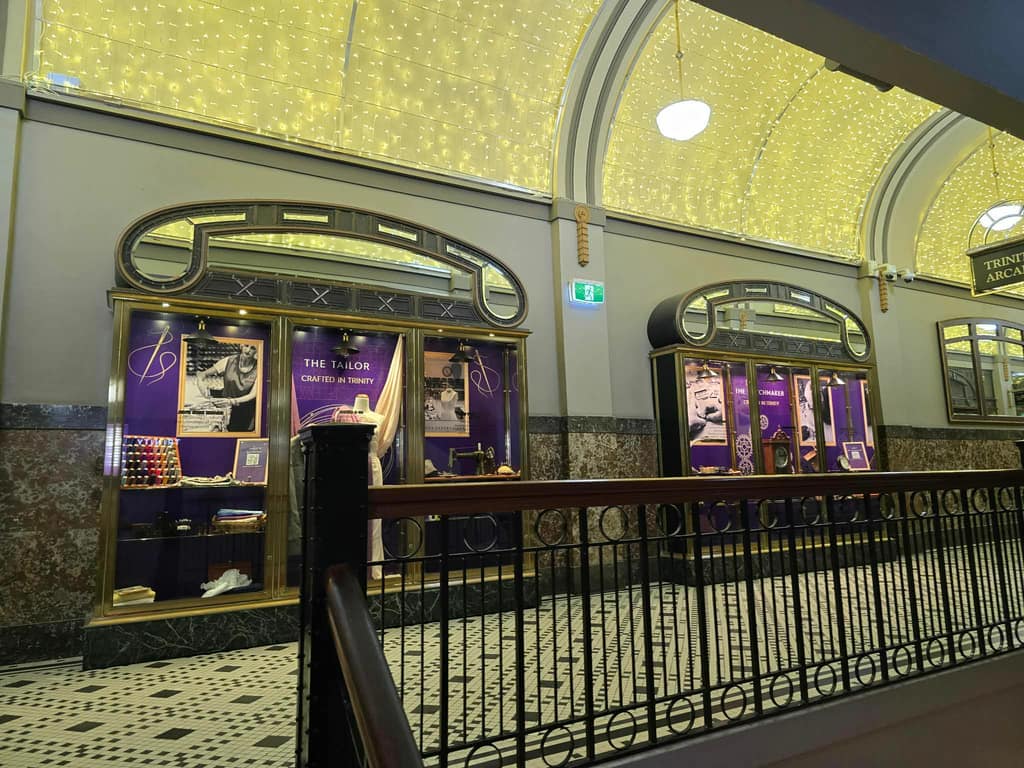
Experiential environments that shape how people experience, remember, and emotionally connect with a place.
From retail to commercial, Bloom'n Events Co transforms overlooked environments into destinations with identity, atmosphere, and meaning.
Experiential placemaking is no longer a creative extra layered onto commercial environments. It has become a strategic tool for shaping how people experience, remember, and emotionally connect with a place.
In a world saturated with advertising, digital noise, and transactional messaging, businesses, landlords, hospitality venues, and public environments are increasingly competing on something far less tangible: meaning.
The environments that leave lasting impressions are rarely the ones displaying the most information. They are the ones that create atmosphere, emotional resonance, cultural identity, and human connection.
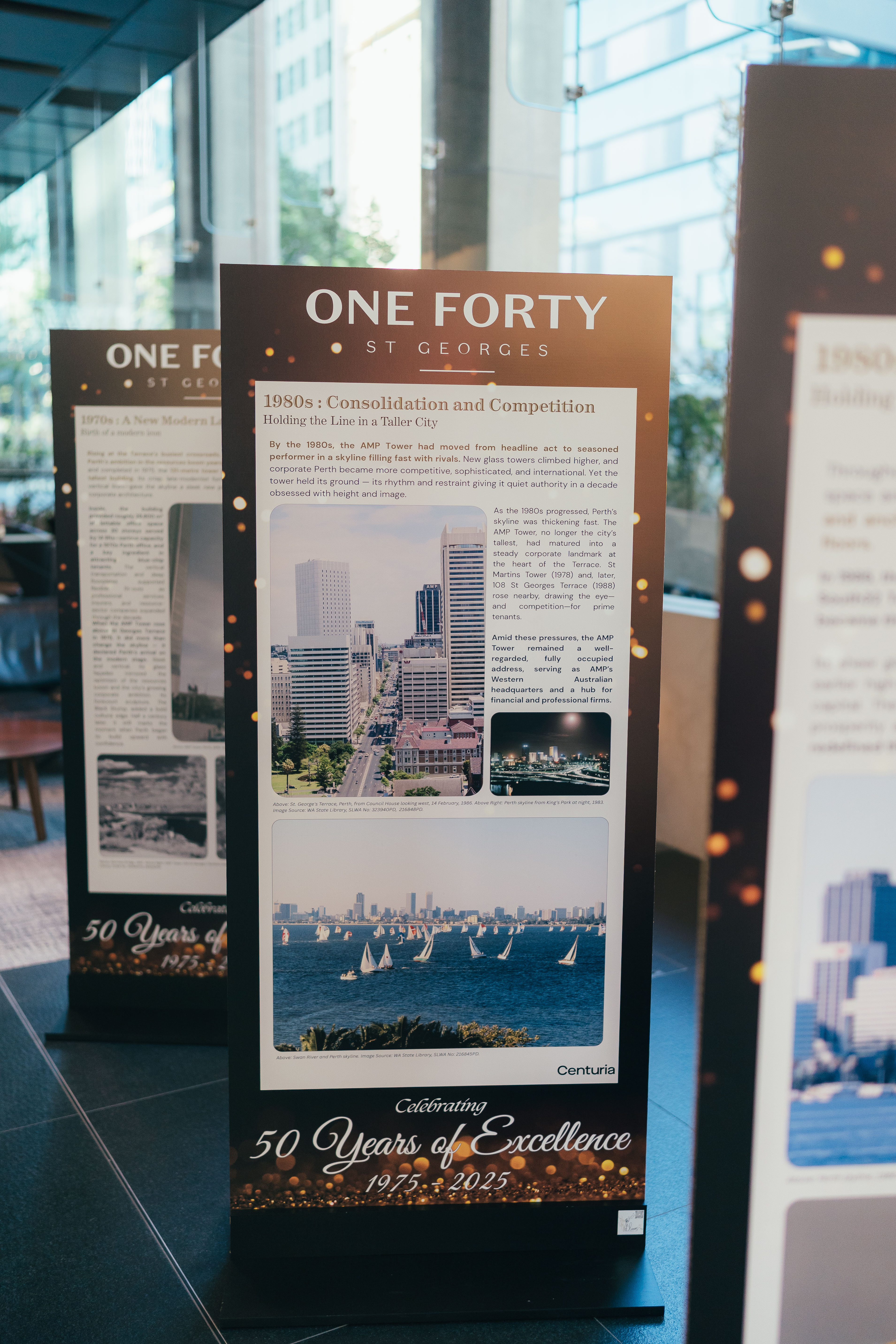
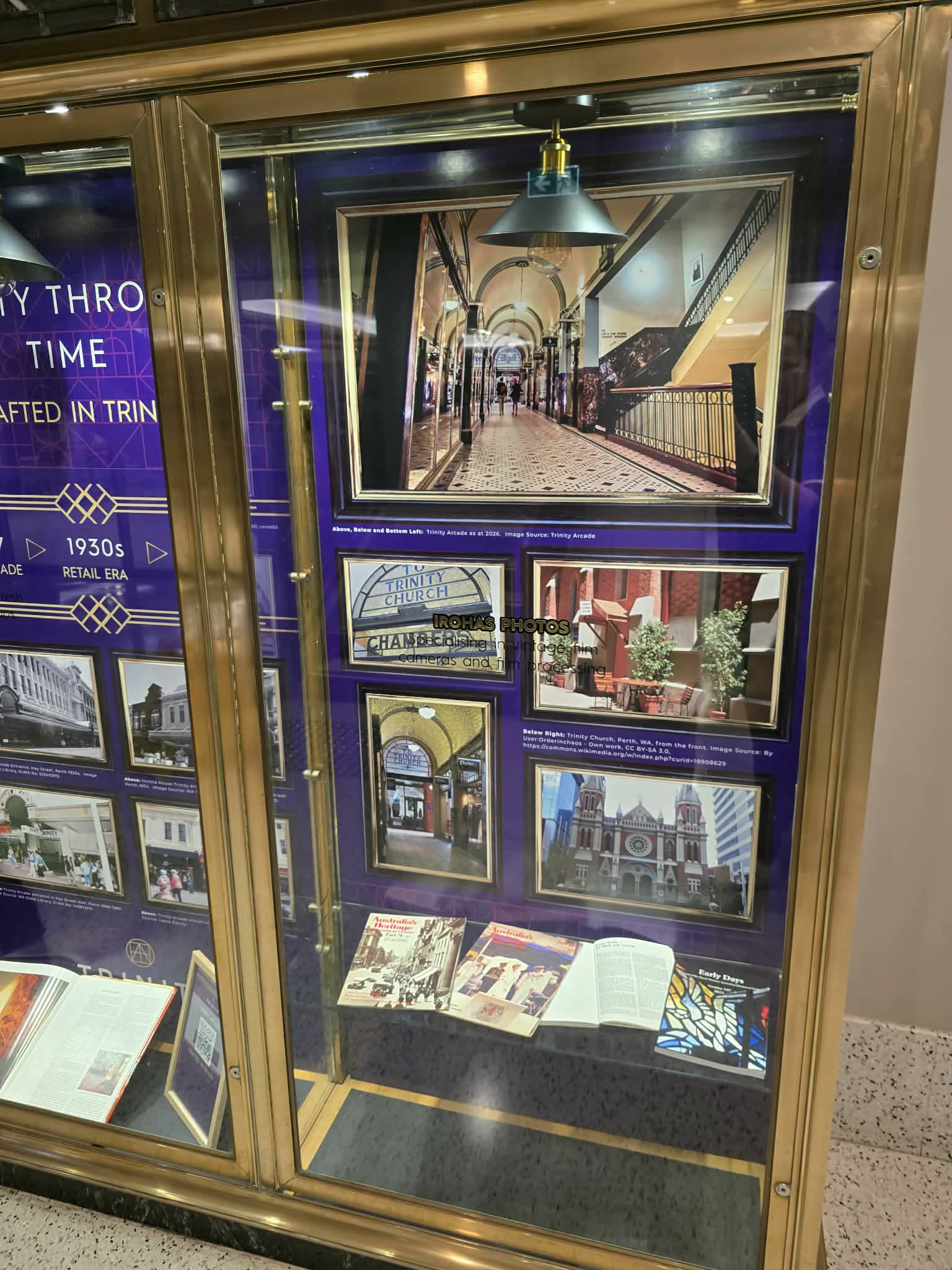
Placemaking environments slow people down and give the eye a reason to stay.
People respond more strongly when space communicates identity, memory, and meaning.
Emotionally encoded experiences are remembered far better than isolated information.
When place feels meaningful, audiences perceive higher quality, care, and authenticity.
Visual merchandising is primarily transactional. Its purpose is to present products attractively, guide customer attention, improve visibility, and encourage purchasing behaviour.
The product remains the centre of the experience.
Rather than asking, “How do we display this product?” experiential placemaking asks, “How do we shape the emotional and cultural experience of this environment?”
That distinction changes both the intent and impact of the space itself.
What Changes
Not simply decorating space.
But shaping how people experience it.
The Trinity Arcade and One Forty St Georges installations were not designed as decorative displays. They were created as immersive placemaking environments that reconnect people with heritage, craftsmanship, architecture, identity, and memory.
The objective was not simply visual enhancement. It was environmental transformation through layered archival imagery, historical interpretation, curated artefacts, typography systems, material textures, architectural integration, and immersive spatial composition.
At Trinity Arcade, the displays do more than present watches, tailoring equipment, cameras, fabrics, or archival photographs. Each cabinet acts like a micro-environment, reframing these objects within the wider story of craftsmanship, specialist retail culture, generational skill, and the evolving identity of the arcade itself.
Instead of isolated merchandise moments, visitors encounter a place that feels interpreted, curated, and culturally alive.
The cabinets create narrative continuity between:
A sewing machine becomes more than an object. A watch becomes more than merchandise. A historic photograph becomes more than decoration. Each element is repositioned as evidence of the people, skills, and stories that shaped the precinct.
Together, the cabinets reconnect visitors with the cultural identity of the arcade, turning circulation space into a destination with memory, atmosphere, and emotional gravity.
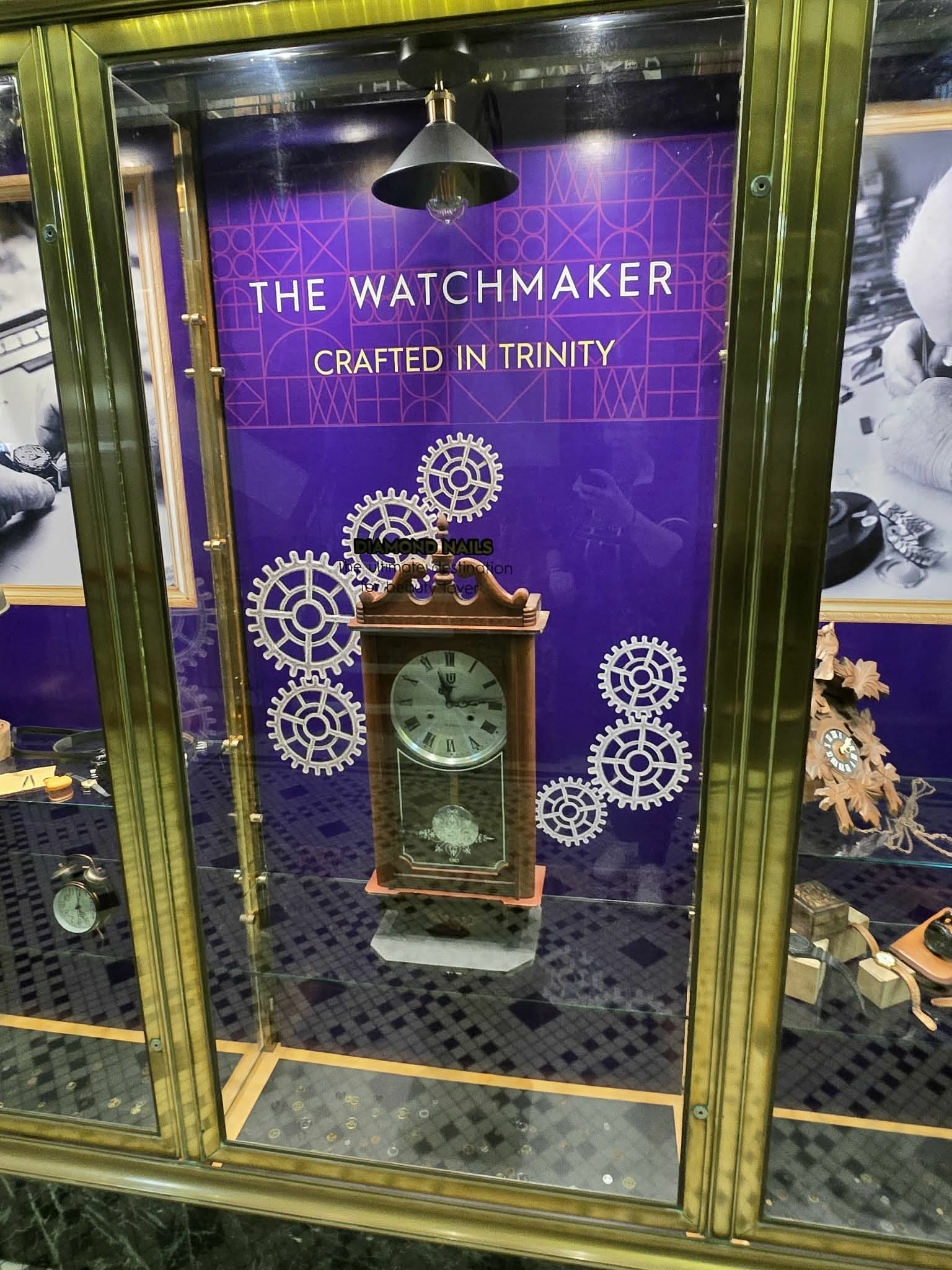
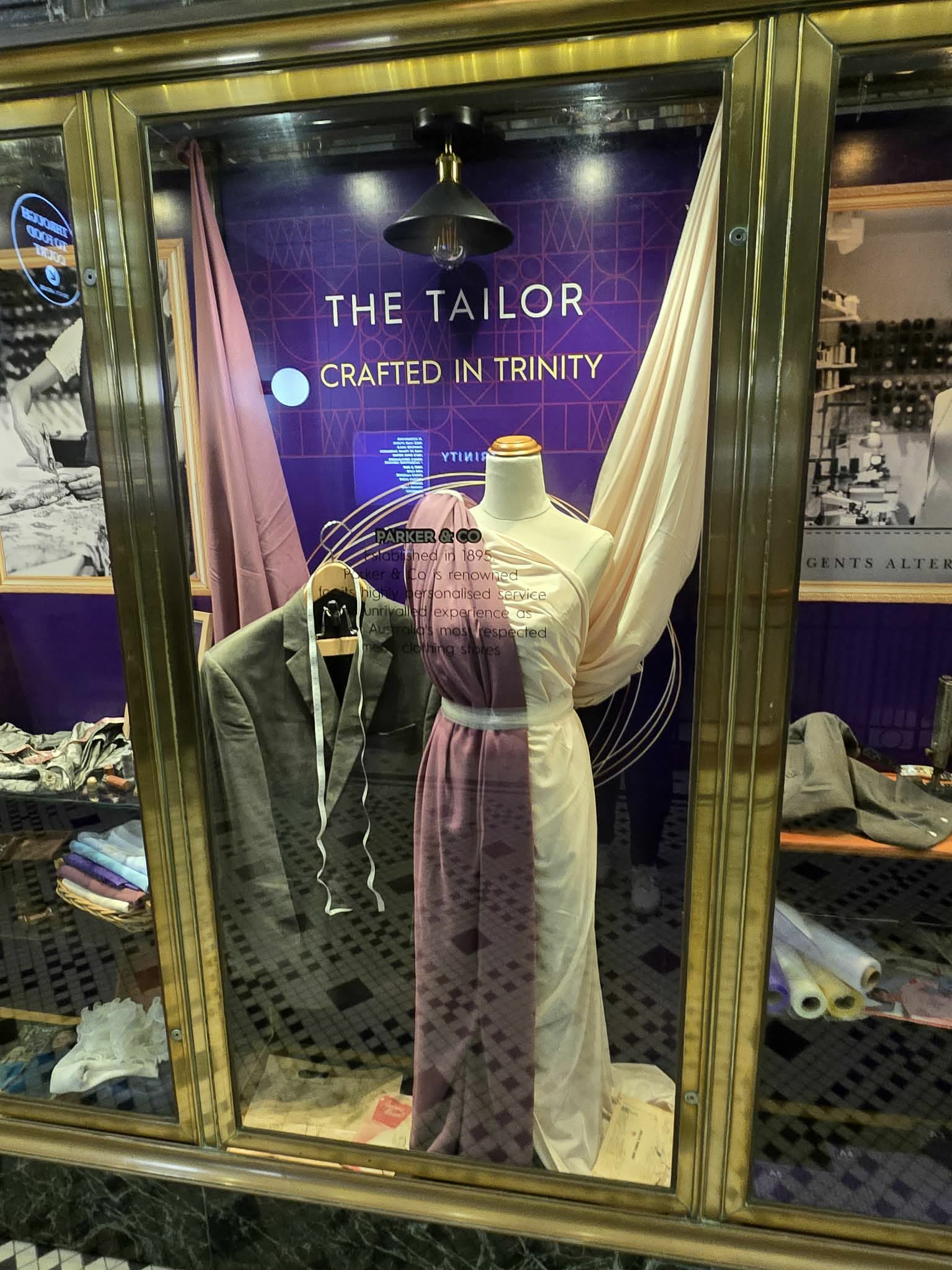
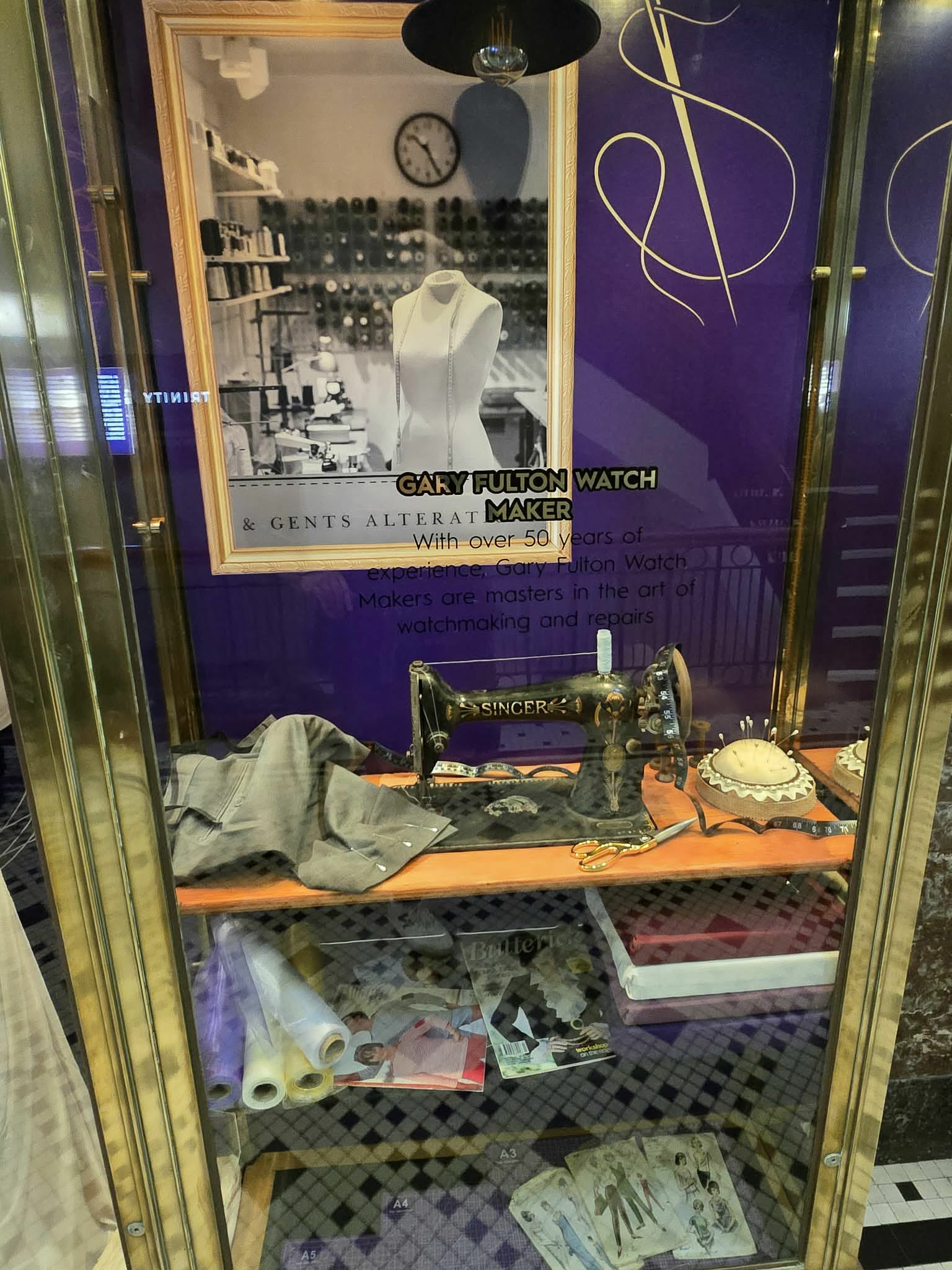
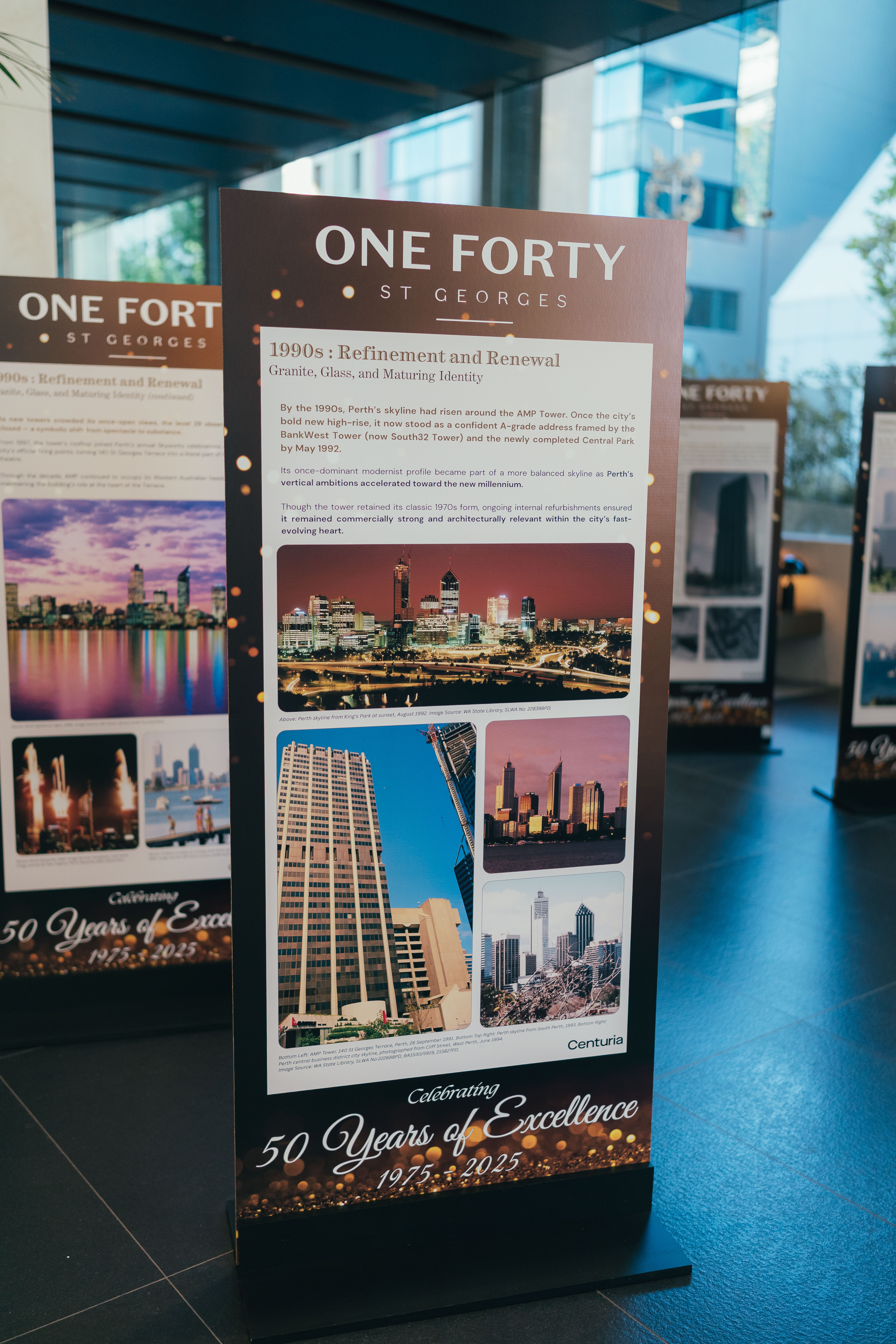
The installations at One Forty St Georges demonstrate the same principle at an architectural scale. The lobby timeline displays and tower-scale pillar installations do not function as signage or decoration.
They reshape the atmosphere of the environment itself, transforming circulation zones into interpretive experiences and reinforcing a sense of continuity, permanence, and institutional identity within the building.
This reflects a broader shift across commercial property, retail, hospitality, and public environments, where spaces increasingly compete not only on functionality, but on experience.
Modern audiences are drawn toward environments that feel authentic, immersive, culturally grounded, and emotionally engaging. This is why experiential placemaking is becoming increasingly important across luxury retail, hospitality, mixed-use developments, heritage precincts, corporate environments, destination venues, and cultural institutions.
Generic spaces are forgettable. Places with identity are not.
Effective placemaking environments are operational systems designed to shape perception and experience. Their impact is often indirect, but commercially powerful, especially in an era defined by attention scarcity and commoditised environments.
That can translate into outcomes such as:
Emotionally engaging environments slow people down, deepen attention, and invite them to stay with the experience longer.
Curated environments help audiences understand not only what a place is, but why it matters and how it should be remembered.
Places that feel culturally grounded and human create stronger emotional connections than generic commercial environments ever can.
Successful experiential placemaking is multidisciplinary by nature. It sits at the intersection of spatial design, behavioural psychology, heritage interpretation, environmental branding, architecture, curation, lighting, graphic communication, fabrication, and visitor experience design.
That means integrating:
These projects were not simple decorative exercises. They were operational systems designed to shape how people move through, interpret, and emotionally connect with the environment.


Why It Matters
This is the future direction of placemaking: not simply decorating space, but shaping how people experience it.
Bespoke installations crafted to shape atmosphere, memory, and interaction.
Explore DisplaysExperiences that bring people together with care, clarity, and presence.
Explore EventsHands-on activations that invite participation, learning, and connection.
Explore WorkshopsThe Trinity Arcade and One Forty St Georges projects demonstrate how curated experiential environments can reconnect people with place, reinforce cultural identity, and transform commercial environments into destinations with emotional significance.
Generic spaces are forgettable. Places with identity are not.
-1600w.avif)
How we crafted an atmosphere for Centuria Capital where Perth business leaders could meet with ease, purpose, and genuine connection.
Read the Story
A one-day event for Hawaiian Shopping Centres that celebrated a key tenant opening while inviting the community to gather, taste, and stay longer.
Read the Story
A food-based July school holiday activation that invited families to create, connect, and linger across multiple Hawaiian shopping centres.
Read the Story
A bespoke 50th birthday celebration for 140 St Georges Terrace that respected the past while presenting a contemporary, future-ready vision.
Read the Story
See how we transformed Trinity Arcade's preserved cabinets into a narrative trail celebrating specialist retail, craftsmanship, and heritage.
Read the Story
A two-phase installation that honoured Breast Cancer Awareness Day, then gently transitioned into a vibrant Spring activation at 140 St Georges Terrace.
Read the StoryWhether you are activating a heritage arcade, commercial lobby, retail precinct, or destination environment, we create placemaking experiences that help people slow down, connect, and remember why the space matters.


